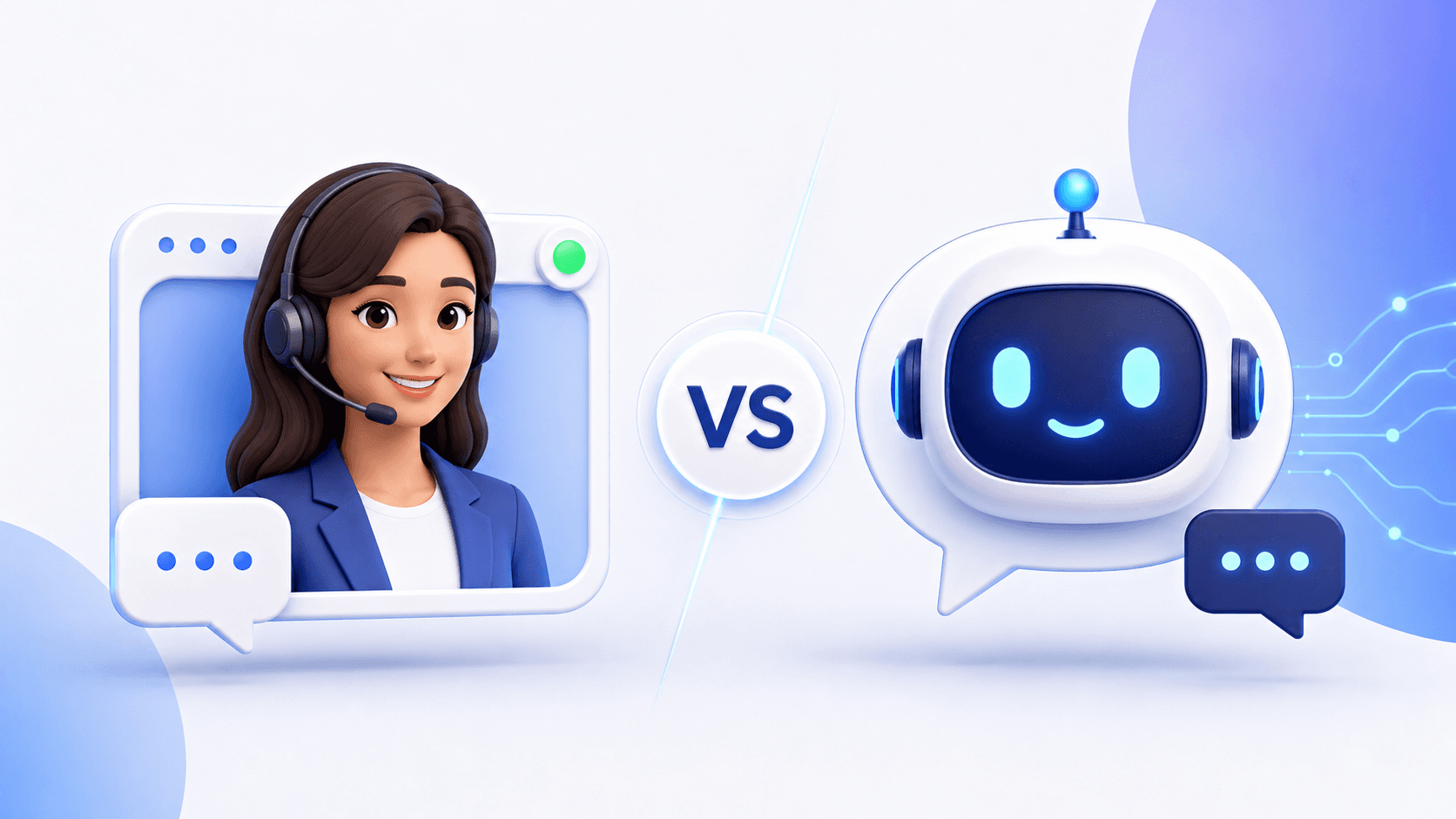
AI vs Human Customer Service: Where Each Works Best
AI and people solve different support problems. Use AI for speed and repeatability, and people for judgment, empathy, and exceptions.
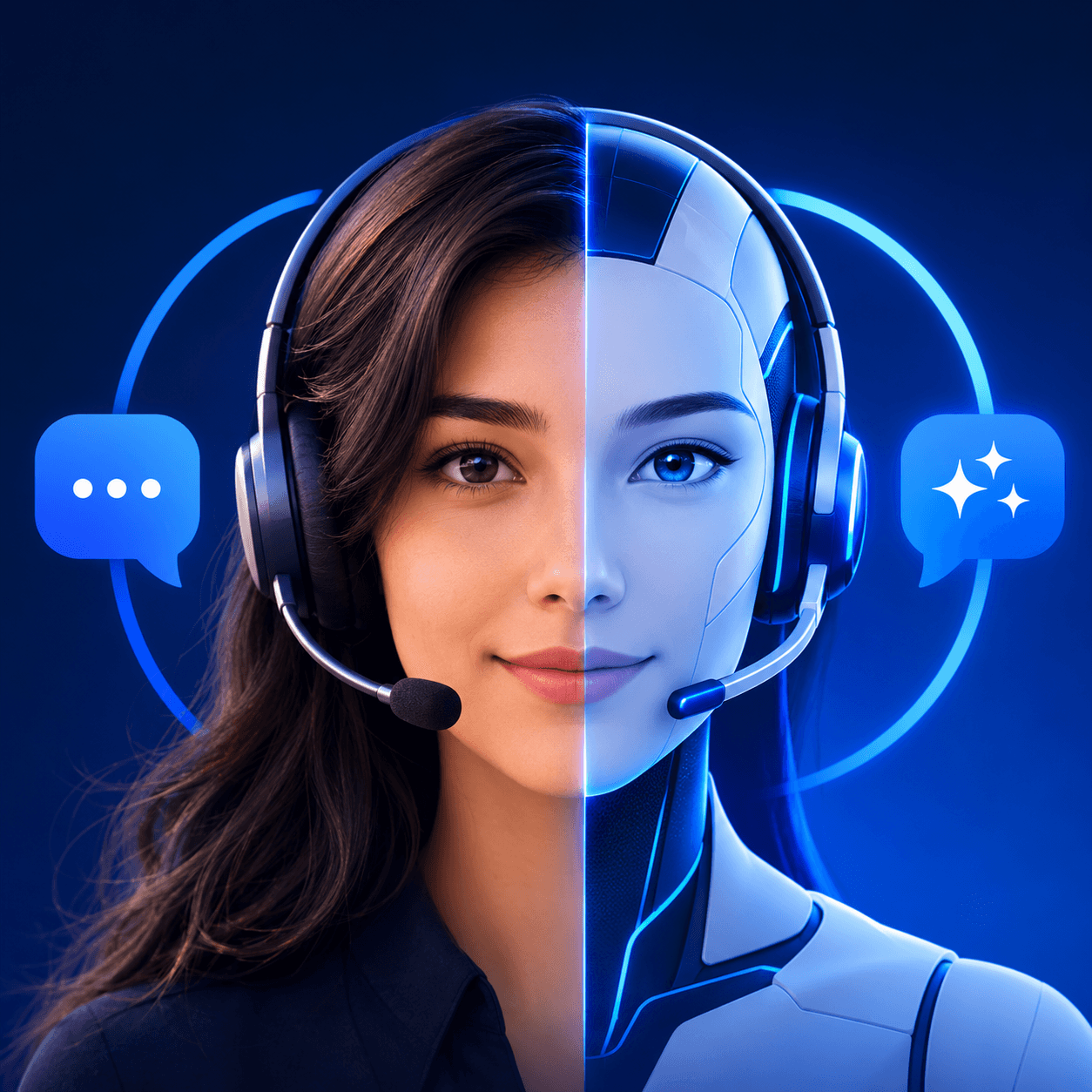
The useful question is not whether AI or people should “win” customer service. It is which participant should own each type of work. AI is strong at availability, consistency, and retrieving approved information. People are strong at judgment, empathy, negotiation, and exceptions.
AI and human support at a glance
| Work | Best default owner | Reason |
|---|---|---|
| Common product and policy questions | AI | Fast, repeatable answers from approved content |
| After-hours first response | AI | Immediate acknowledgment and guidance |
| Complex diagnosis | Human with AI context | Requires exploration and judgment |
| Upset customer or sensitive issue | Human | Empathy, ownership, and authority matter |
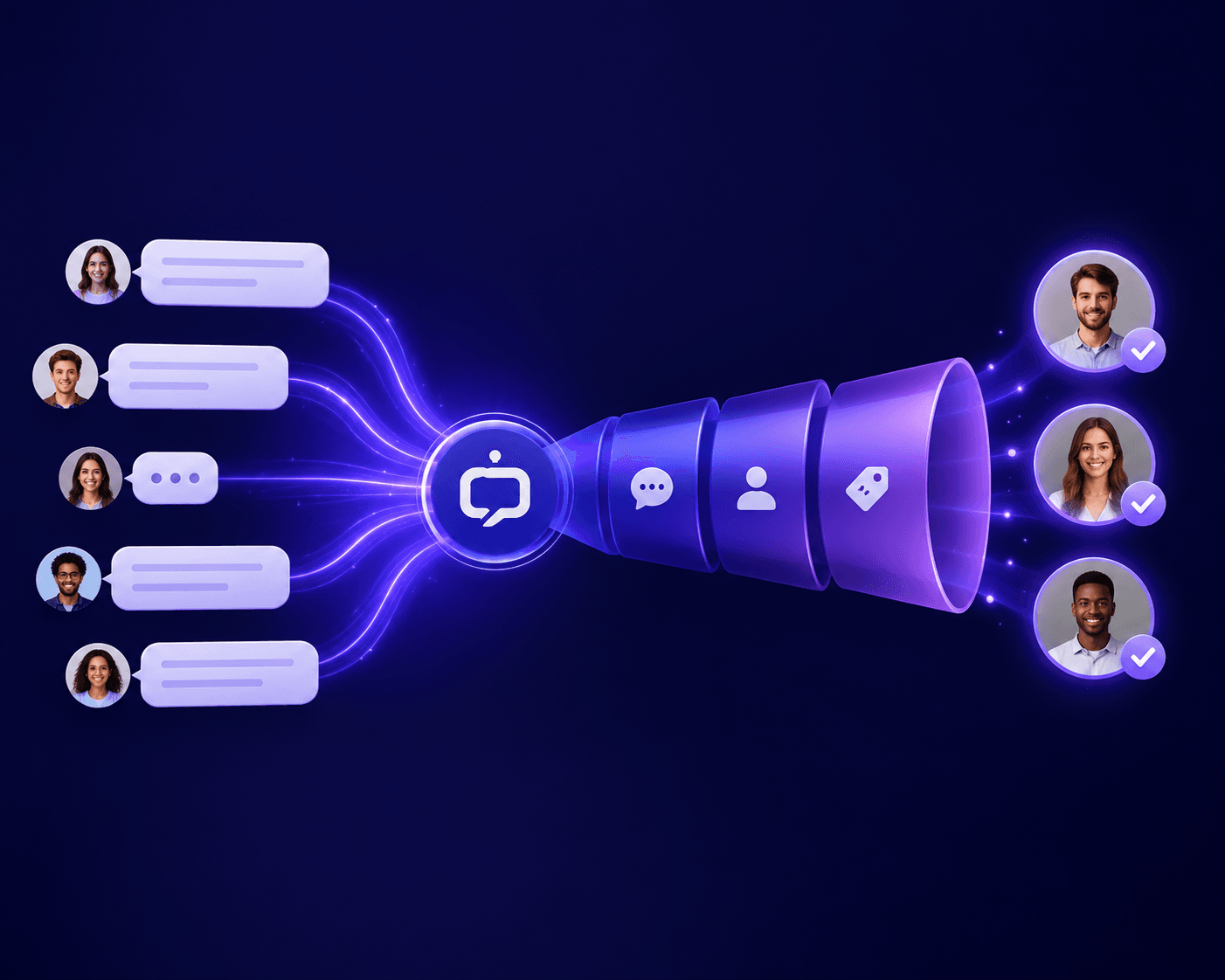
| Lead details and basic qualification | AI | Consistent capture without a separate form |
| Negotiation and exceptions | Human | Business trade-offs require accountability |
What AI should own
Give AI the work that benefits from instant response and a stable knowledge source: FAQs, setup guidance, shipping information, plan explanations, basic troubleshooting, lead capture, and routing. Train it on your real documentation through a system such as Zorachat’s business knowledge feature.
AI should not be judged only by how many conversations avoid a human. A useful assistant also recognizes uncertainty and preserves context when it escalates.
What people should own
People should handle situations where the answer depends on nuance, emotion, authority, or a relationship. That includes account exceptions, sensitive complaints, negotiations, ambiguous technical failures, and high-value conversations that benefit from personal attention.
How to combine both without confusing customers
- Be transparent that the conversation begins with an AI assistant.
- Give the AI a defined knowledge boundary.
- Configure clear escalation rules.
- Transfer the transcript and visitor context to the human.
- Let the person return routine follow-up to AI after resolution.
Zorachat’s live-monitoring workflow lets the team watch conversations and join when timing matters rather than waiting for a separate ticket.
What changes for a small support team
A hybrid model does not eliminate ownership. Someone still needs to maintain source content, review failed answers, respond to escalations, and measure outcomes. The difference is that human time can be concentrated on conversations where it creates the most value.
Measure the system, not the technology
Review response time, answer correctness, resolution, escalation reasons, customer satisfaction, lead capture, and follow-up completion. If automation rises while satisfaction falls, the workflow is not successful. If human workload falls because customers receive accurate answers faster, the combination is working.
Frequently asked questions
Can AI replace a customer-service team?
AI can handle repeatable work, but most businesses still need people for judgment, accountability, and relationship-sensitive conversations.
Should customers be told they are speaking with AI?
Yes. Clear disclosure sets expectations and makes the transition to a person easier to understand.
Design collaboration, not competition
The strongest support experience gives customers an immediate answer and a reliable path to a person. Explore Zorachat human handoff or deploy an assistant for free.