Why Chatbots Fail—and How Human Handoff Helps
Chatbots fail when knowledge is weak, boundaries are unclear, customers are trapped, or nobody owns improvement. Here is how to recover.

Chatbots usually fail for operational reasons, not because conversation automation is inherently useless. The knowledge is incomplete, the assistant is allowed to guess, the customer cannot reach a person, or nobody reviews what happens after launch.
Failure 1: weak or conflicting knowledge
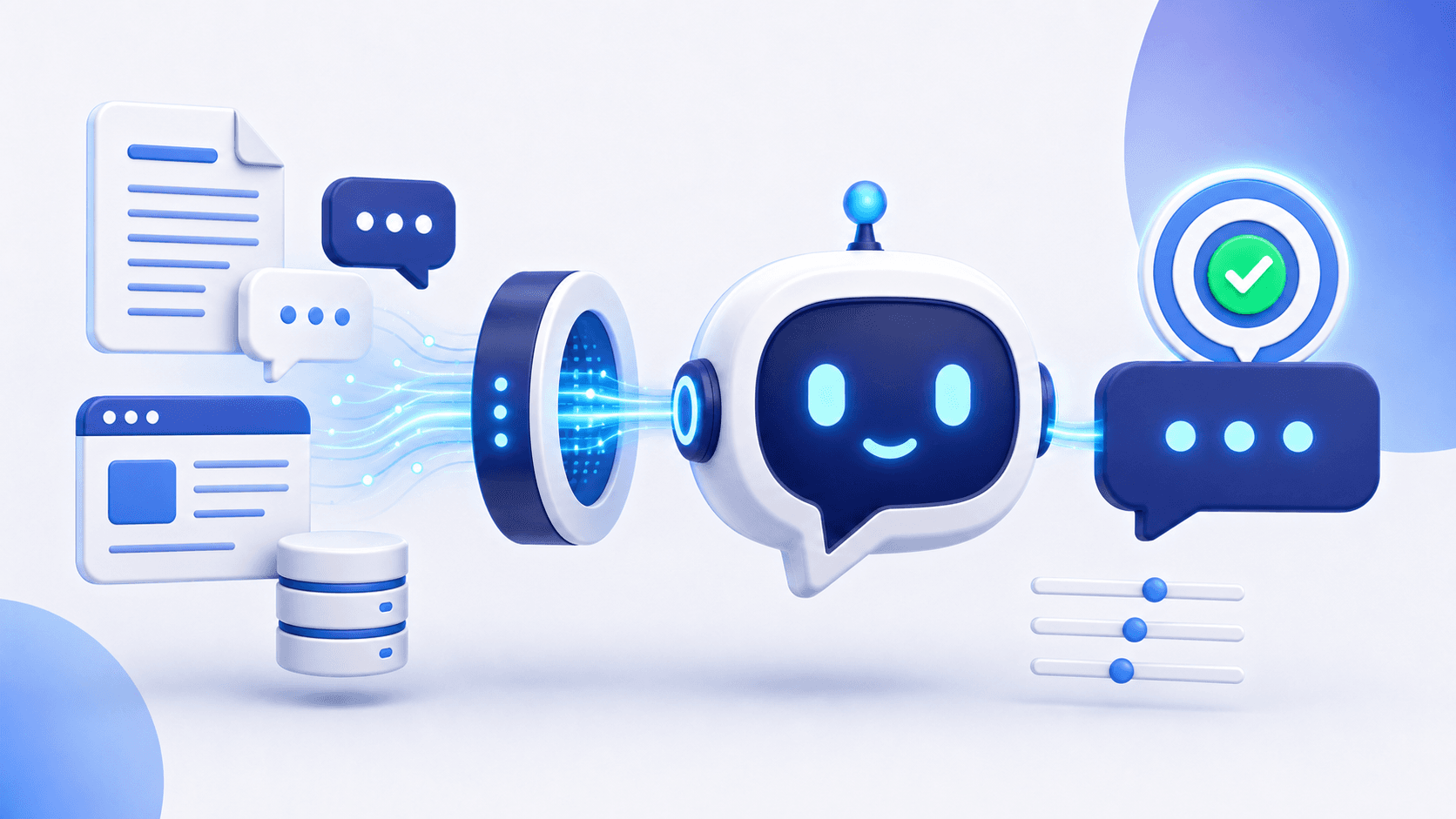
An assistant cannot reliably resolve questions when product pages and policies disagree. Fix the source of truth before tuning prompts. Use the workflow for training on website content.
Failure 2: no clear boundary
A chatbot that answers every question will eventually answer beyond its evidence or authority. Define safe fallbacks for missing information, sensitive actions, and exceptions.
Failure 3: no human escape route
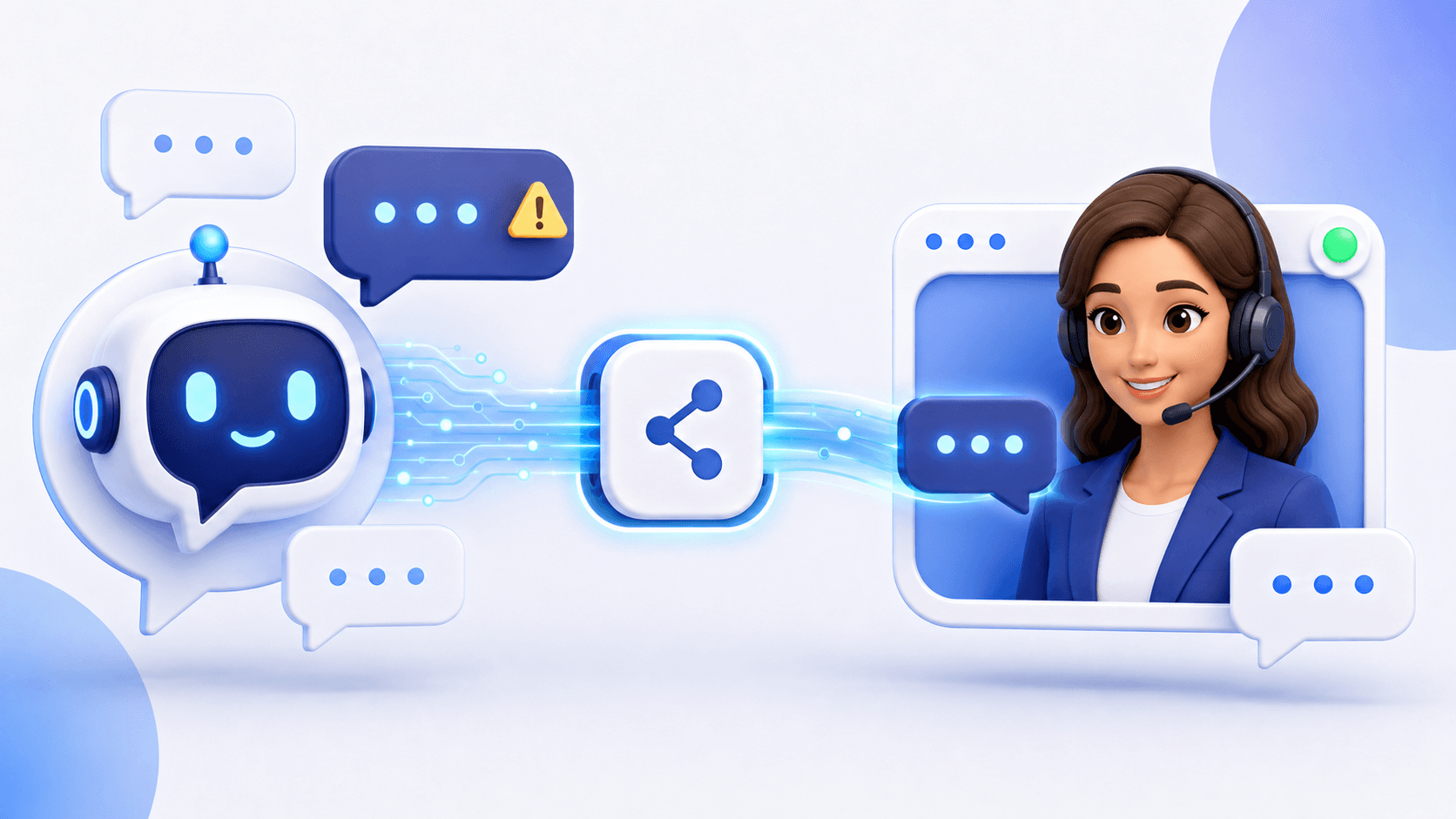
Customers become frustrated when repeated failures lead to another automated loop. Provide human handoff with the transcript and explain what will happen next.
Failure 4: the conversation design ignores emotion
A perfectly accurate policy quotation may still be unhelpful to an upset customer. Detect repeated friction and route the situation to someone who can take ownership.
Failure 5: optimizing for deflection alone
If the only goal is keeping conversations away from people, the system may hide unresolved issues. Balance automation with correctness, resolution, feedback, and escalation quality.
Failure 6: nobody owns improvement
Products, policies, and customer questions change. Assign responsibility for reviewing conversations, updating sources, and testing changes. Live monitoring helps teams see where the assistant struggles.
A recovery plan
- Pause or restrict answers in high-risk areas.
- Collect the most common failed conversations.
- Correct source content and remove contradictions.
- Add explicit escalation rules.
- Retest with real questions.
- Launch with an owner and a weekly review cadence.
Frequently asked questions
Should we remove the chatbot after a bad launch?
Restrict it if it creates material risk, then correct knowledge, boundaries, and handoff. The right response depends on the severity of the problem.
Can human handoff fix poor answers?
It limits the damage and helps customers progress, but it does not replace the work of improving the assistant’s knowledge.
Give the assistant a boundary and an owner
A useful chatbot knows what it can answer and how to get help. Deploy Zorachat with knowledge, monitoring, and a human escape route.